
Search Washington Divorce Records
Washington divorce records are public court documents maintained by the County Clerk at the Superior Court in each county where the case was filed. The state has 39 counties, and each one keeps its own archive of dissolution case files. Many counties now provide online case searches through their own portals or through the statewide Washington Courts case search system. For the complete case file or a certified copy of the Decree of Dissolution, you need to contact the County Clerk in the county where the dissolution was granted. They can pull records by party name or case number and provide copies.
Washington Divorce Records Overview
Where to Find Washington Divorce Records
The County Clerk's office at the Superior Court is where divorce records are stored in Washington. Each of the 39 counties has its own County Clerk who operates under one of the state's judicial districts. The clerk maintains the complete case file for every dissolution filed in the county. That file contains the Petition for Dissolution of Marriage, the response or joinder, financial declarations, and the final Decree of Dissolution. The County Clerk in each county manages these records and can produce copies for you.
Washington also maintains a state-level vital records office. The Washington State Department of Health, Center for Health Statistics, keeps a central index of divorces. They can issue a divorce verification letter but not the full court documents. If you need the actual decree or findings of fact, you have to contact the County Clerk in the county where the case was filed. The Department of Health can confirm that a dissolution took place and provide the county and approximate date, which is helpful when you are unsure where to begin looking.
The Washington State Department of Health Vital Records office issues certified divorce certificates for dissolutions that took place in Washington from 1968 to present. Their website shows current ordering options, fees, and contact details for the Center for Health Statistics in Tumwater.
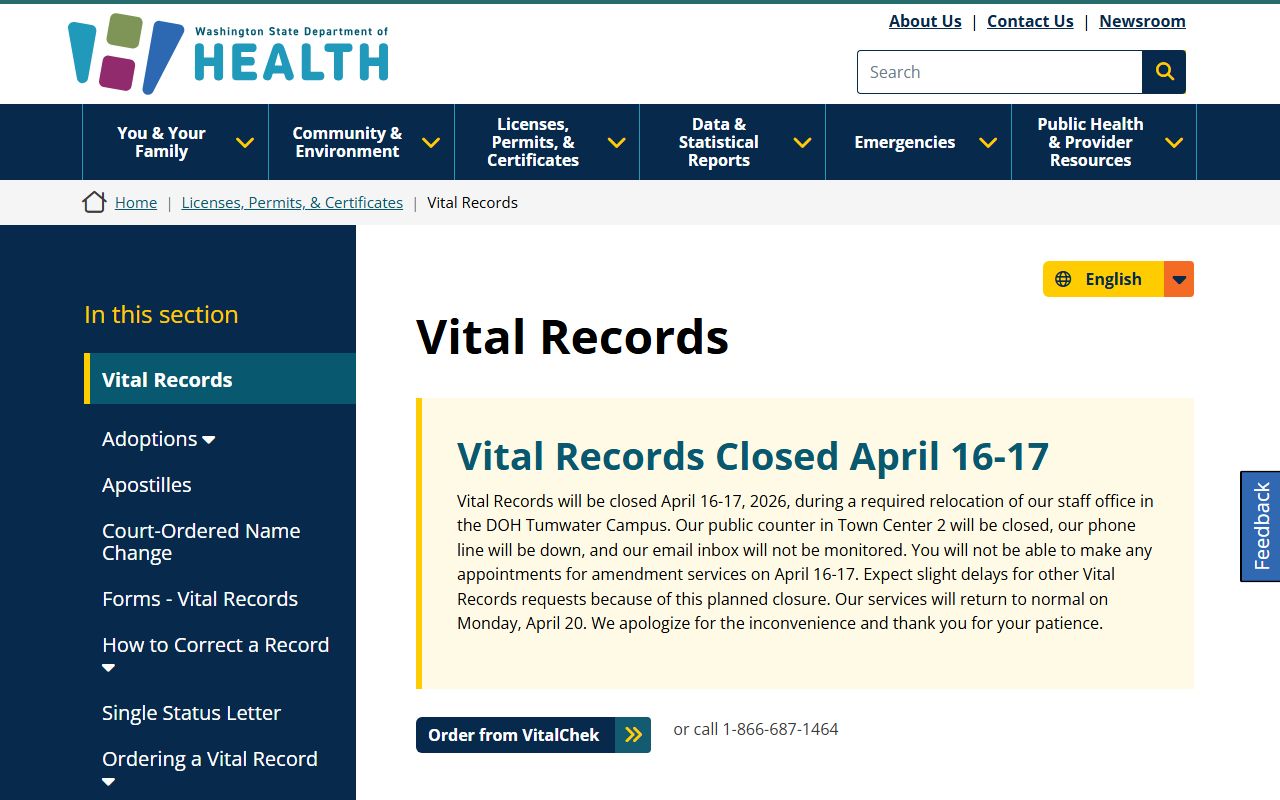
The DOH can confirm a dissolution took place and issue a certificate of dissolution, but does not have the full decree or case file. For those documents, contact the county clerk in the county where the case was filed.
The state's ordering page for marriage and divorce records explains what information you need, how long orders take, and the difference between a certified copy and a noncertified informational copy.
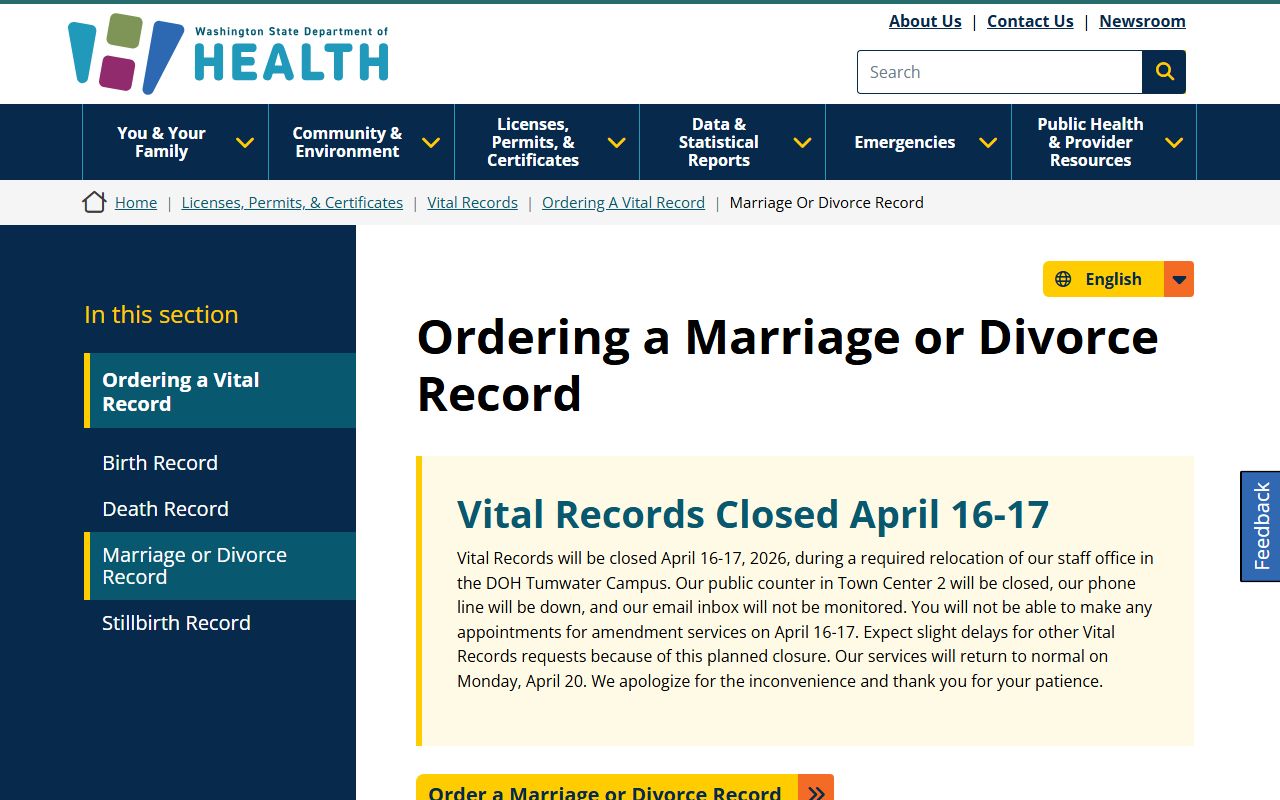
Anyone can request a dissolution certificate — you do not need to be a party to the case or prove a relationship to the subject of the record.
Note: For dissolution decrees and full case files, go to the County Clerk at the Superior Court in the county where the case was filed. The Washington Department of Health only issues divorce verification letters, not copies of court documents.
How to Search Divorce Records in Washington
Washington gives you several ways to look up divorce records. Online access is the fastest route for pulling basic case information. Going to the courthouse in person is the better option when you need certified copies or want to review the full case file.
The Washington Courts Name and Case Search tool lets you look up dissolution cases by entering one or both party names. You can filter by county or search statewide and narrow by case type to get to family law cases faster.
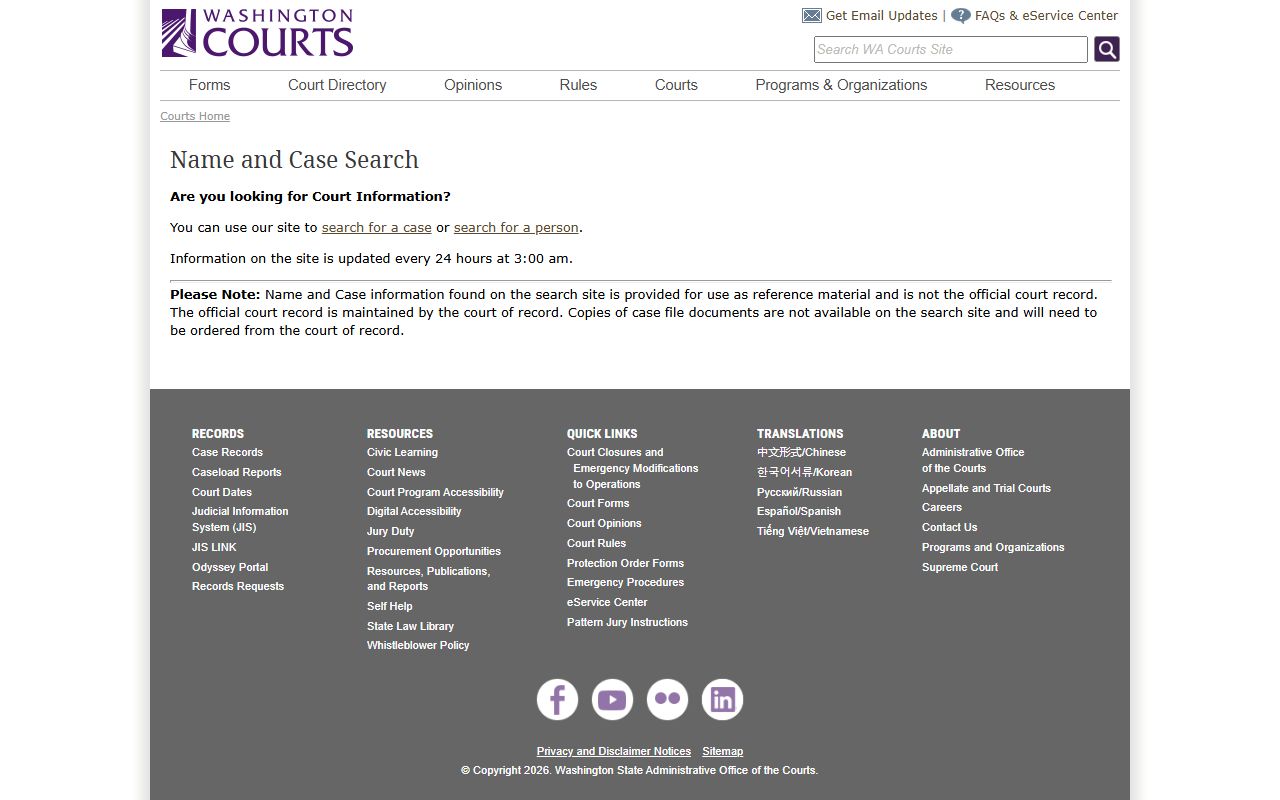
Search results show the case number, party names, filing date, and current case status. You can click through to see the full docket for any case in the system.
The Washington Courts Case Locator is another statewide lookup tool that pulls from multiple court systems. It is useful when you are not sure which county handled a dissolution or when you want to confirm a case number before going to the courthouse.
The Case Locator covers Superior Court cases across most counties and is free to use without creating an account.
Many Washington Superior Courts also use the Washington Courts Odyssey Portal, which provides online access to case records, court calendars, and filing information for participating courts. Some functions require a free account but basic case lookups are open to anyone.
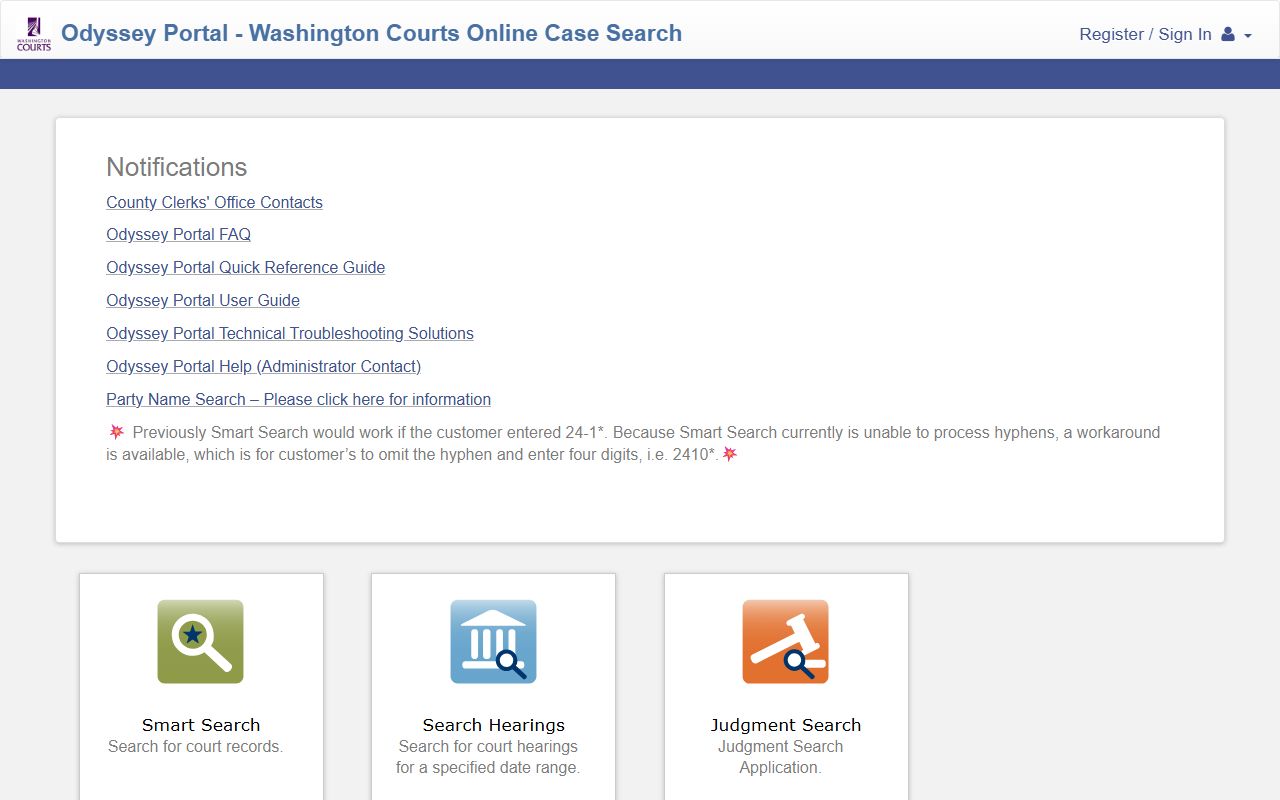
Not all counties are on the Odyssey system. If your county is not listed, use the statewide Name and Case Search instead.
To search online, you typically need:
- Full name of at least one spouse
- County where the case was filed (or search statewide)
- Approximate year of the filing if you have it
You can also visit any County Clerk's office in person. Head to the county where the dissolution was filed. The clerk can look up records and make copies. Certified copies cost more than plain ones. Some counties accept requests by mail if you cannot visit in person. Call the County Clerk first to ask about their process and current fees.
Types of Divorce Records in Washington
Washington uses the term "dissolution of marriage" rather than "divorce" in its legal proceedings. The central document is the Decree of Dissolution, which is the court order that officially ends the marriage. This document spells out all the terms: property division, custody arrangements, child support, and spousal maintenance. Once a judge signs it and the case is finalized, the marriage is legally over.
When both spouses reach an agreement on all issues, they can file an Agreed Decree of Dissolution based on their settlement. When they cannot agree, the case proceeds to trial and the judge issues the terms in a contested decree. In either situation, the final document is filed with the County Clerk's office.
A dissolution case file in Washington typically includes:
- Petition for Dissolution of Marriage
- Summons and proof of service (or joinder)
- Response from the other spouse (if filed)
- Financial declarations and asset disclosures
- Temporary orders for custody or support
- Parenting plan (if children are involved)
- Settlement agreement or trial findings
- Decree of Dissolution of Marriage
Most of these documents are public record. Anyone can request copies from the County Clerk. Some items like sealed financial records or documents involving minors may have restricted access.
Official forms for dissolution cases are available at no cost on the Washington Courts forms page. The standard family law forms are all there — petition, summons, financial declaration, parenting plan templates, and more.
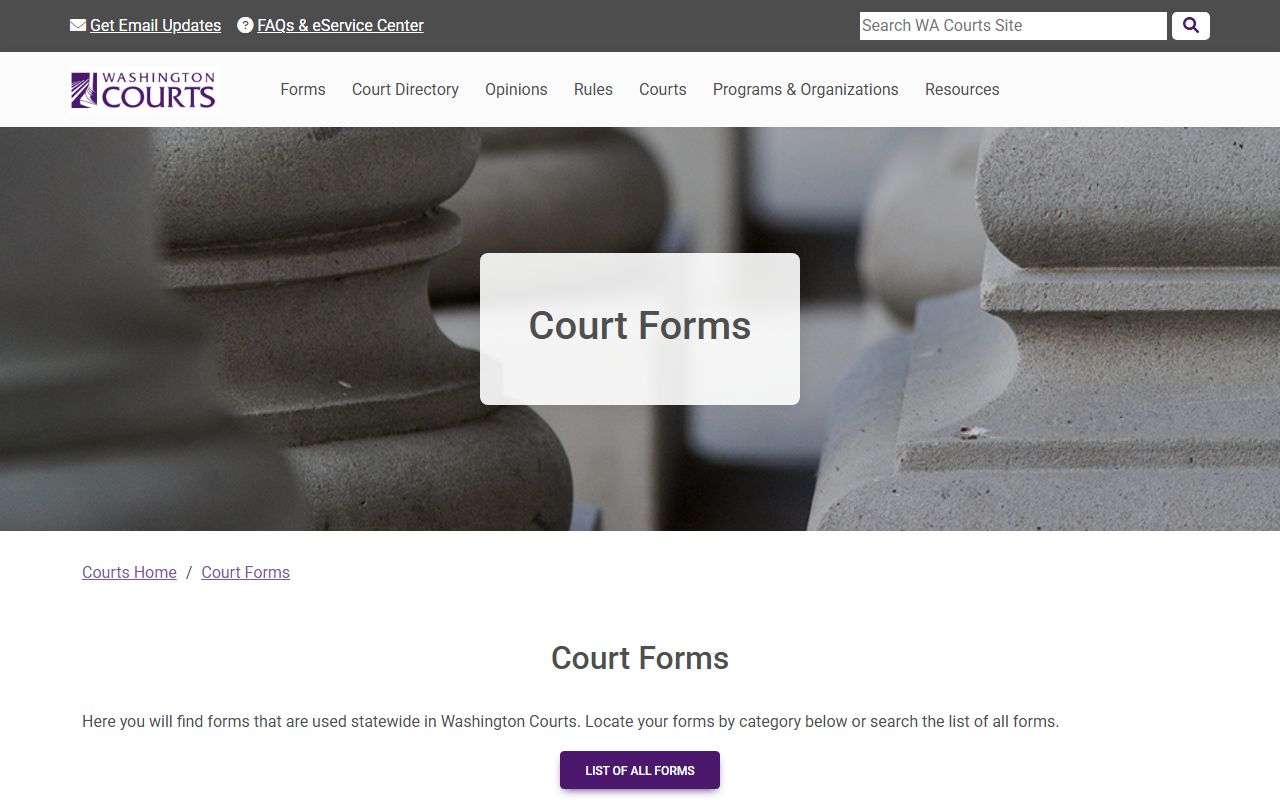
Using the official forms helps ensure your filing is accepted without rejection for formatting or content issues.
Washington Divorce Laws and Rules
All dissolution law in Washington is governed by the Revised Code of Washington (RCW) Chapter 26.09. This chapter covers everything from filing the petition to dividing property to establishing custody. Washington uses the term "dissolution of marriage" as the formal legal name for the divorce process.
Under RCW 26.09.030, either spouse must be a resident of Washington State or a member of the armed forces stationed in the state at the time of filing. There is no minimum time you must live in a specific county before filing. You file in the Superior Court of the county where either spouse resides.
Washington is a pure no-fault divorce state. Under RCW 26.09.030, the only ground for dissolution is that the marriage is "irretrievably broken." The court does not assign blame or consider fault-based reasons. Either spouse can petition for dissolution, and the other spouse cannot prevent it from going through.
90-Day Waiting Period: Washington law mandates a 90-day waiting period after the petition is filed and served before the court can finalize the dissolution, under RCW 26.09.030. The decree cannot be entered until at least 90 days after filing and service on the other party. There are no exceptions to this waiting period.
Washington is a community property state. Under RCW 26.09.080, the court divides community property and community liabilities in a manner that is "just and equitable." Community property generally includes anything acquired during the marriage. Separate property includes assets owned before the marriage and gifts or inheritances received during the marriage, provided they were kept separate.
You can read the full text of RCW 26.09.030 on the Washington State Legislature website. The statute covers the petition requirements, residency rules, no-fault standard, and the mandatory waiting period in one place.
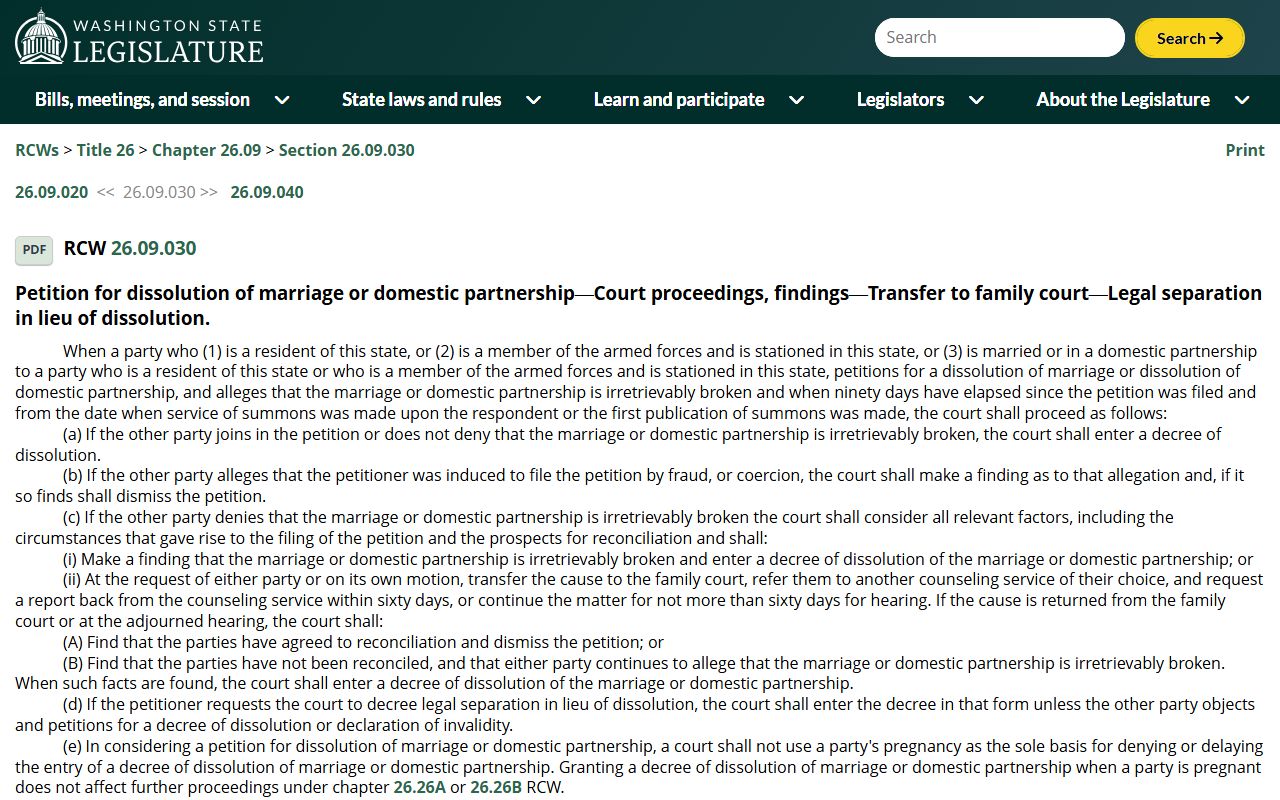
The Legislature site also links to related statutes throughout Chapter 26.09, which covers child support, custody, and property division rules.
Child custody rules are found in RCW 26.09.187. Washington requires a parenting plan for every case involving children. The court evaluates multiple factors to determine the best interest of the child, including the strength of the child's relationship with each parent, each parent's involvement in daily care, and the stability of proposed living arrangements.
Divorce Filing Fees in Washington
Filing for dissolution in Washington costs roughly $300 to $400. The exact amount varies by county since each Superior Court sets its own fee schedule within state guidelines. In King County, the filing fee is approximately $350. Pierce and Snohomish counties charge comparable amounts. The petitioner pays this fee when filing the Petition for Dissolution of Marriage.
Service of process is an additional cost. You can have the sheriff serve the papers for about $40 to $80, depending on the county. Private process servers set their own rates. If both spouses agree, the respondent can sign a Joinder and waive the need for formal service entirely.
Obtaining copies of existing dissolution records has its own fee structure. The County Clerk charges per page for plain copies, usually around $0.50 per page. Certified copies cost more, typically $5 for the first page plus $1 per additional page. Fees vary by county, so contact the specific court to confirm. The Department of Health charges $20 for a divorce verification letter from their statewide index.
The Department of Health ordering page walks through the steps to request a divorce verification letter from the state's central index. Orders can be placed online, by mail, or in person at the DOH office in Tumwater.
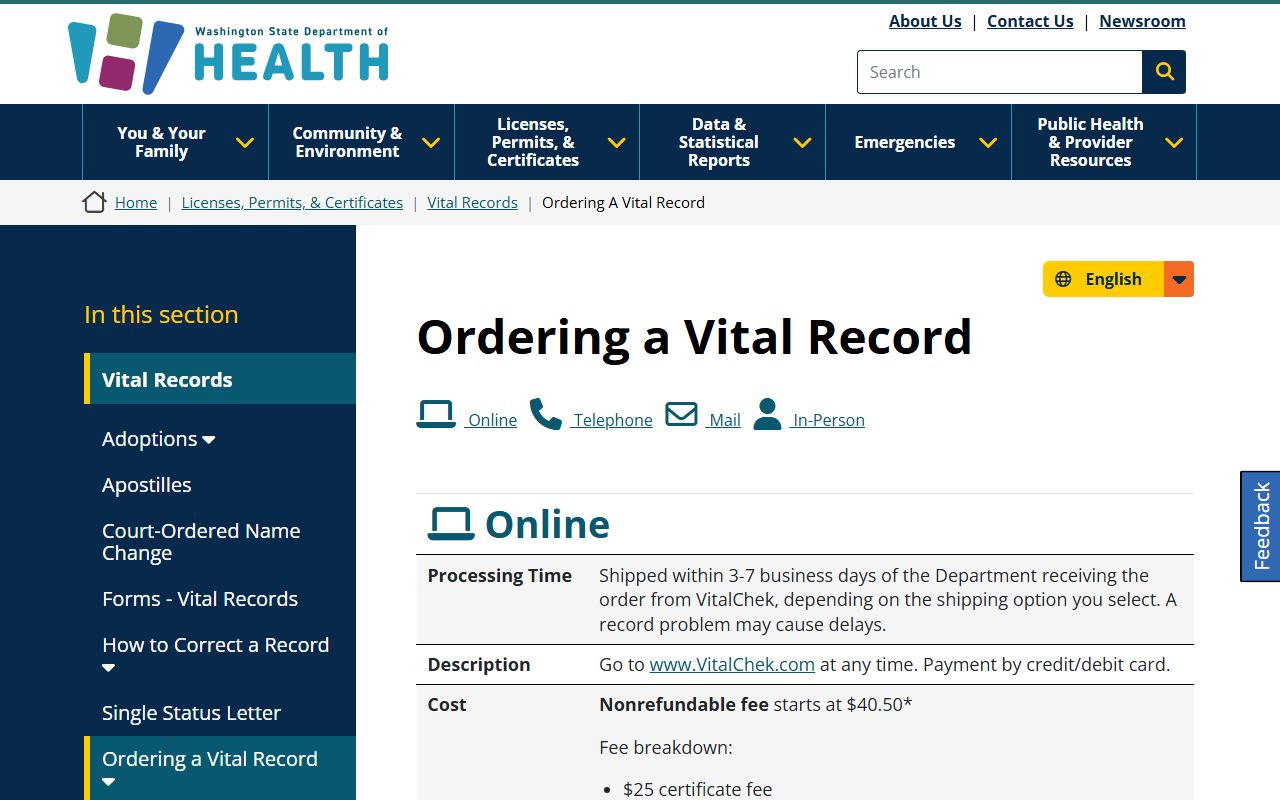
A divorce verification letter from DOH costs $20 and confirms the dissolution took place, including the county and approximate date of the filing.
The CDC Where to Write for Vital Records page provides a summary of how to request Washington vital records including dissolution certificates, along with mailing addresses and current fees.
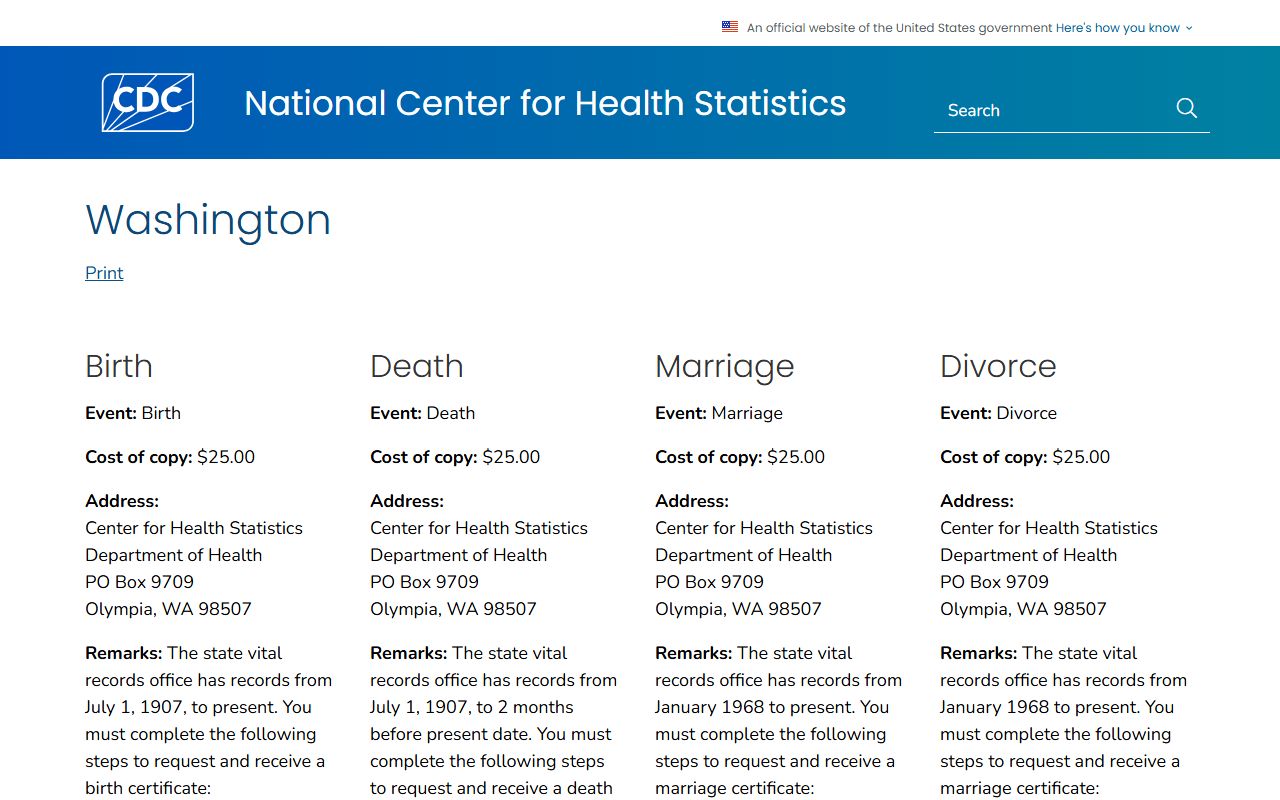
This CDC page is a useful reference if you are unsure whether to contact the state DOH or the county clerk for the type of record you need.
Fee waivers are available for individuals who cannot afford to pay. You file a motion and declaration for a waiver of civil filing fees and surcharges. You need to demonstrate your income and expenses. The court reviews your request and determines eligibility. If you receive certain public assistance benefits or your household income falls below 200% of the federal poverty level, you generally qualify. Forms are available at the courthouse or on the Washington Courts website.
Tip: Filing fees are adjusted periodically. Contact the County Clerk in your county or check their website to verify the current costs before you file.
How to Get Copies of Washington Divorce Records
To get copies of a dissolution record in Washington, contact the County Clerk at the Superior Court in the county where the case was filed. You can go in person or call the clerk's office. They can look up the file by name or case number. Plain copies are less expensive than certified ones. Certified copies carry the court seal and are often required for name changes or proving your marital status to another agency.
You can also search for basic case details online through the Washington Courts website. The system shows case status, party names, and docket entries for participating courts. It typically does not include full document images. For the actual Decree of Dissolution or other papers from the file, you need to go through the courthouse.
Some counties accept requests by mail. You generally send a written request with the case details along with a check or money order for the copy fees. Include a self-addressed stamped envelope. Turnaround times depend on the court's workload. In-person requests can often be handled on the spot. Mail requests may take one to two weeks.
The Washington State Archives Digital Archives holds older dissolution records transferred from county courts. You can search the collection online for free. Records there are typically older cases that predate modern online court systems.
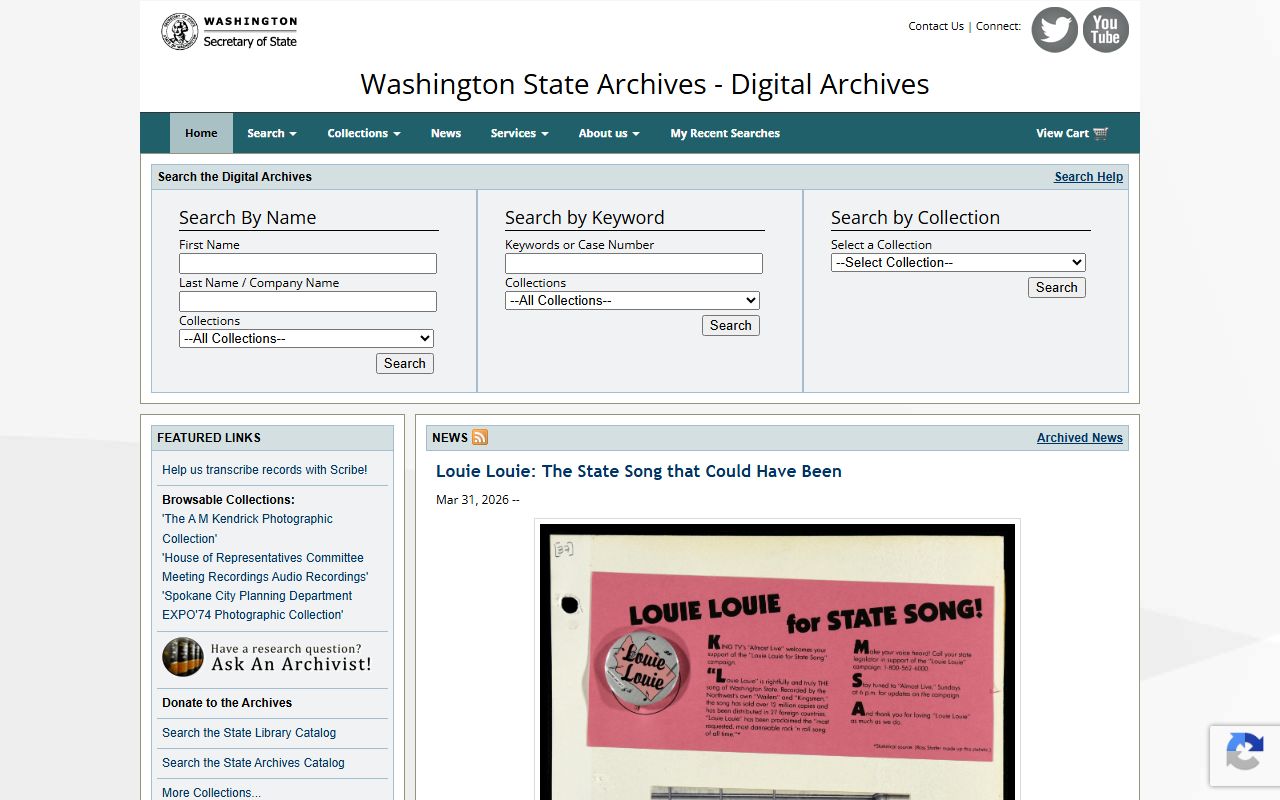
The Digital Archives is a good starting point for dissolution cases from the mid-twentieth century or earlier that may not appear in current county court search systems.
For a basic verification that a dissolution occurred, you can contact the Washington State Department of Health, Center for Health Statistics. They maintain a statewide index of dissolutions. The fee is $20. You can request a verification by mail or online. Visit the Department of Health vital records page for instructions.
The DOH vital records FAQ explains the difference between a certified copy and an informational copy, what each one is valid for, and who can request each type.
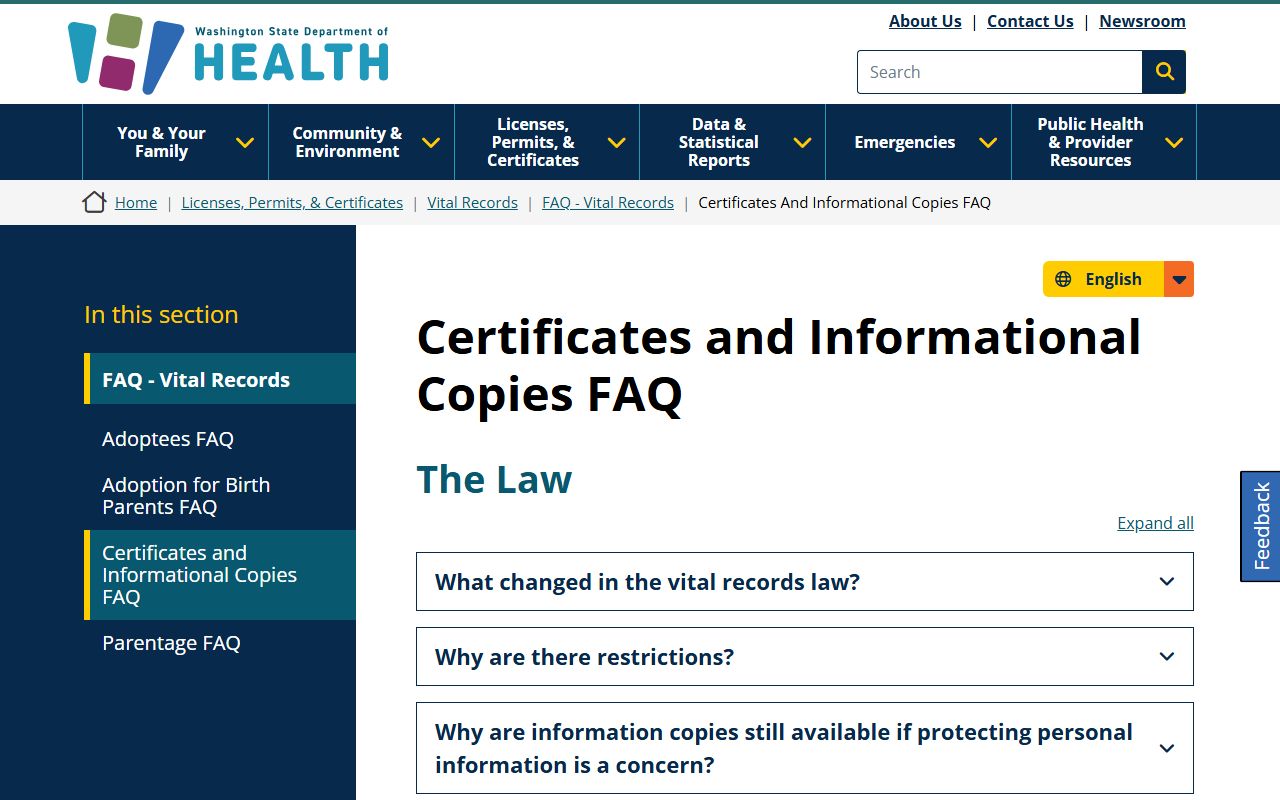
Certified copies carry legal weight for court filings and government applications. Informational copies are for personal use and do not have the same official standing.
Legal Help for Divorce in Washington
Several organizations offer legal assistance with dissolution cases in Washington. Northwest Justice Project is the largest legal aid organization in the state and provides free civil legal services to low-income residents. Call (888) 201-1014 to ask about family law services. Columbia Legal Services handles cases involving systemic issues affecting low-income communities statewide.
The Washington State Bar Association runs a lawyer referral service. Call (206) 443-9722 to connect with a family law attorney in your area. The initial consultation fee varies by attorney. You can also search for lawyers through the WSBA's online directory at wsba.org.
WashingtonLawHelp at washingtonlawhelp.org offers self-help guides and legal forms for people managing their own dissolution. The Washington Courts website also provides standardized family law forms through the courts.wa.gov forms page. Many courthouses have a family law facilitator or self-help center where staff can direct you to the right forms, though they cannot provide legal advice.
The Washington State Attorney General's guide to obtaining records explains how the Public Records Act applies to court and government records. It is a straightforward resource if you have had a records request denied or are unsure of your rights.
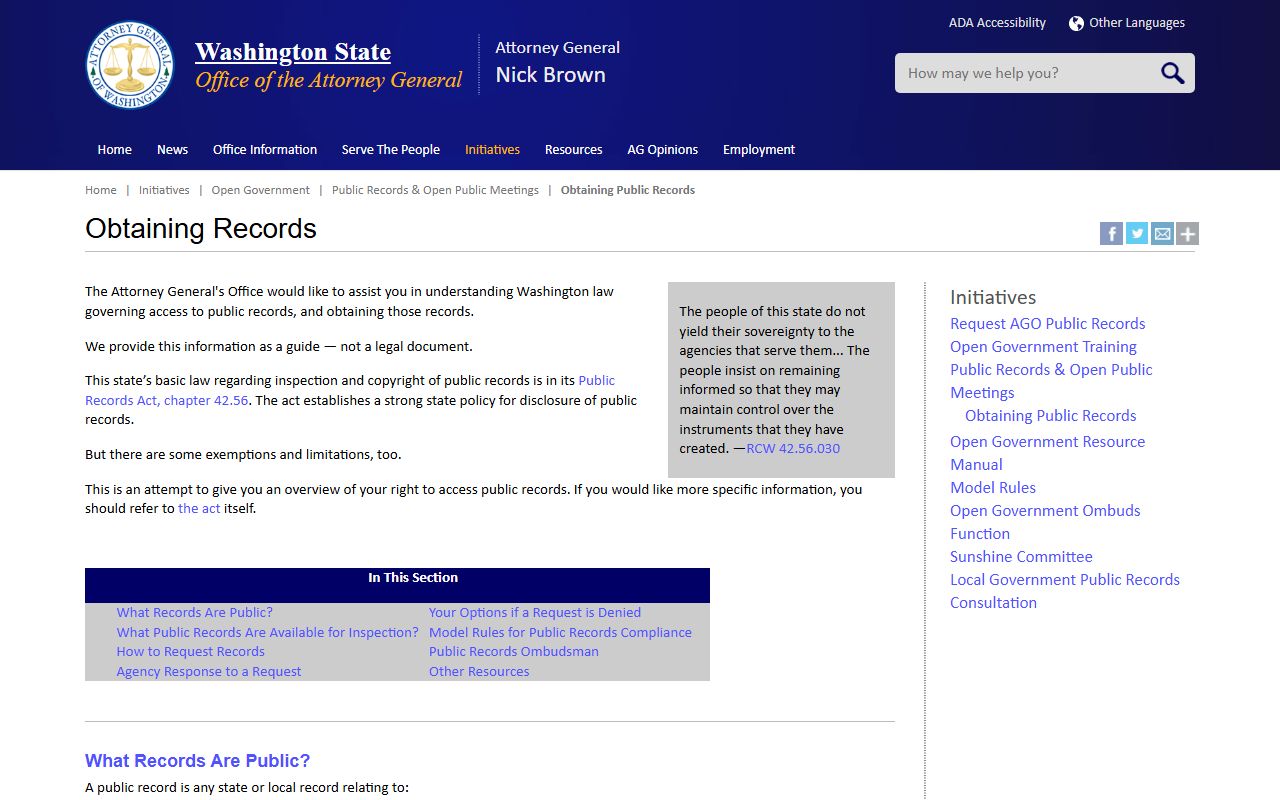
The AG's office can direct you to the right agency if you are unsure whether a dissolution record falls under the Public Records Act or the separate court records access rules.
Are Divorce Records Public in Washington
Yes. Court records in Washington are generally public under RCW Chapter 42.56, the Washington Public Records Act, as well as the General Rule 31 governing access to court records. You do not need to be a party to the case. You do not have to state a reason for your request. Most of the case file is open to anyone who asks at the County Clerk's office.
The Washington State Archives common research subjects page includes guidance on accessing court records and vital records for genealogy and public records requests. It covers what the archives hold and how to submit a request.
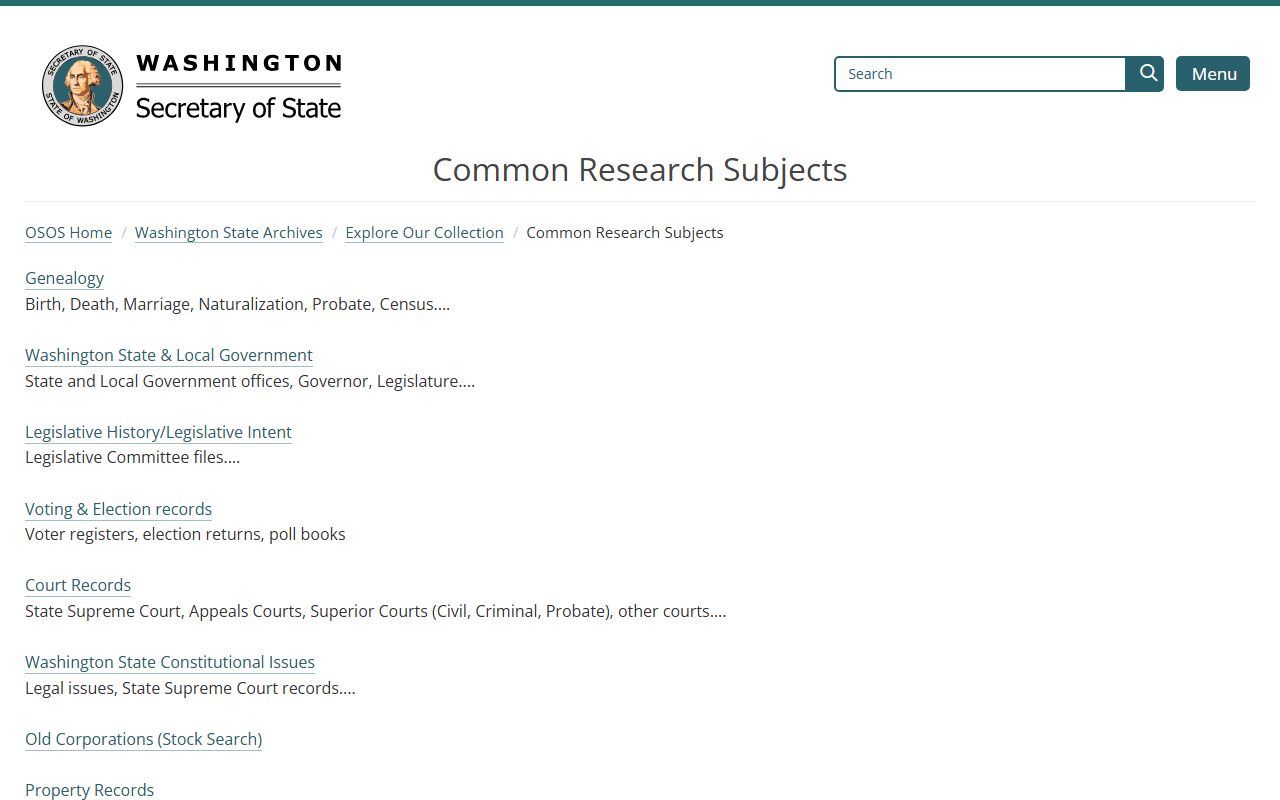
The archives maintain older dissolution case files transferred from county superior courts. You can search and request them through the archives' online system at no charge for the search itself.
Certain portions of dissolution files have restricted access. Sealed financial documents like tax returns and detailed asset statements may not be available to the public. Social security numbers and account numbers are redacted from public filings. Records involving minors, including parenting evaluations, may also be subject to limited access. A party can petition the court to seal additional records by demonstrating good cause, but this is uncommon. The judge weighs privacy interests against the public's right to access when making that determination.
Under RCW 42.56.365, certain vital records are exempt from public disclosure under the Public Records Act. This statute defines what the Department of Health can release compared to the full case files held by county clerks.
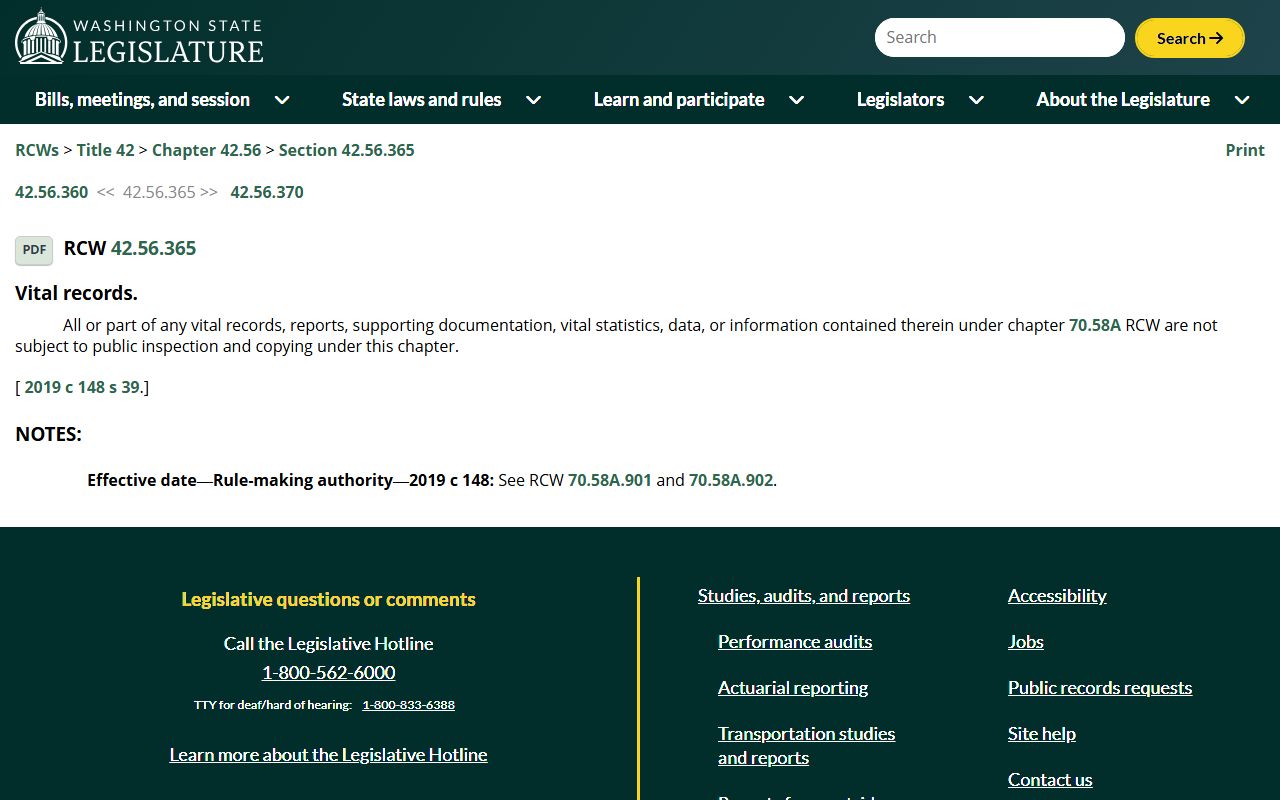
The exemptions in RCW 42.56.365 apply mainly to the state's central vital records index, not to the full case files at county clerks, which follow the general court records access rules.
Most dissolution records in Washington are open to the public. Financial source documents and some child-related reports may have restricted access.
Browse Washington Divorce Records by County
Each of Washington's 39 counties has its own County Clerk at the Superior Court who handles dissolution cases. Pick a county below to find local contact info and resources for divorce records in that area.
Divorce Records in Major Washington Cities
Residents of major cities file for dissolution at the Superior Court in their county. Pick a city below to find out where to go for divorce records in that area.